 Sign In







SOCIETY & SOCIAL SCIENCES
37 €
Due to French bank holidays, some delays may occur in the processing of orders.
Coup de coeur
(Fashion), by Mariama
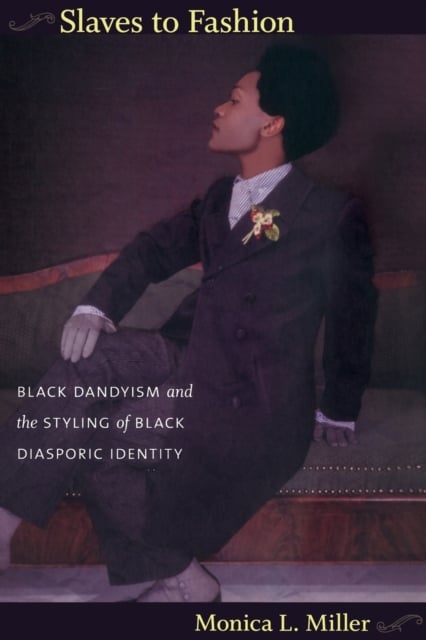
Monica L. Miller's academic analysis of black dandyism highlights how sartorial style is crucial to black identity in the diaspora. This work, which inspired the 2025 Met Gala's "Superfine: Tailoring Black Style," suggests that fashion and dandyism serve as tools for self-expression and resistance against societal oppression for black communities. The dandy, in this context, is portrayed as an outcast and revolutionary figure who transcends conventional boundaries of sex, race, and class.
Slaves to Fashion is a pioneering cultural history of the black dandy, from his emergence in Enlightenment England to his contemporary incarnations in the cosmopolitan art worlds of London and New York. It is populated by sartorial impresarios such as Julius Soubise, a freed slave who sometimes wore diamond-buckled, red-heeled shoes as he circulated through the social scene of eighteenth-century London, and Yinka Shonibare, a prominent Afro-British artist who not only styles himself as a fop but also creates ironic commentaries on black dandyism in his work. Interpreting performances and representations of black dandyism in particular cultural settings and literary and visual texts, Monica L. Miller emphasizes the importance of sartorial style to black identity formation in the Atlantic diaspora. Dandyism was initially imposed on black men in eighteenth-century England, as the Atlantic slave trade and an emerging culture of conspicuous consumption generated a vogue in dandified black servants. “Luxury slaves” tweaked and reworked their uniforms, and were soon known for their sartorial novelty and sometimes flamboyant personalities. Tracing the history of the black dandy forward to contemporary celebrity incarnations such as Andre 3000, Miller explains how black people became arbiters of style and how they have historically used the dandy’s signature tools-clothing, gesture, and wit-to break down limiting identity markers and propose new ways of fashioning political and social possibility in the black Atlantic world. With an aplomb worthy of her iconographic subject, she considers the black dandy in relation to nineteenth-century American literature and drama, W. E. B. Du Bois’s reflections on black masculinity and cultural nationalism, the modernist aesthetics of the Harlem Renaissance, and representations of black cosmopolitanism in contemporary visual art.
Publisher: Duke University Press
Binding: Paperback
Publication date: 08 Oct 2009
Dimensions: 157 x 235 x 25 mm
ISBN: 9780822346036